Hacksaw Gaming OpenRGS in 2026: How Partner Studios Are Reshaping the Game Catalogue
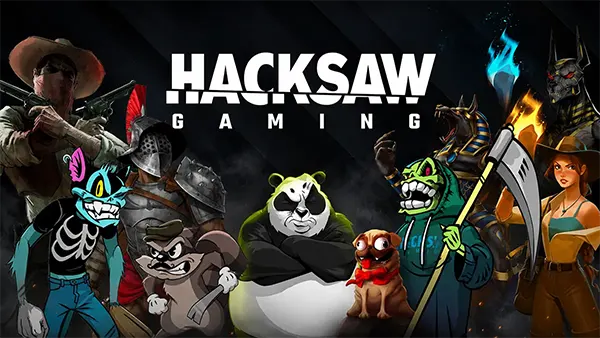
Hacksaw Gaming entered 2026 with a catalogue that was no longer shaped only by its own internal development team. OpenRGS had become a second content stream built around independent studios using Hacksaw’s technology, distribution reach and regulatory support to publish games under their own creative identities. That change is now visible in the release calendar. Hacksaw reported 42 OpenRGS titles from partner studios during 2025, while the number of partner studios doubled from four to eight over the same year. Expansion continued in 2026 with Foxhound Games, Good Times Studios and Aloha Gaming joining in February, April and May, followed by Zerplaay Games in August. The important point is not simply that the catalogue is getting larger. OpenRGS is changing what a “Hacksaw Gaming catalogue” means by adding studios with different art styles, themes, game structures and design backgrounds.
OpenRGS Has Turned Hacksaw into a Multi-Studio Content Network
OpenRGS was created as a way for outside developers to build and release games using an established Remote Gaming Server, or RGS, rather than creating every part of the technical infrastructure themselves. In practical terms, the partner studio can concentrate more of its resources on the game client, visual direction, features and mathematical design while Hacksaw supports the server-side framework, testing and distribution process. Hacksaw states that OpenRGS can support releases across more than 20 regulated markets, which is particularly significant for smaller studios that may have strong creative teams but do not have the commercial reach or compliance resources of a large supplier.
The growth figures show how quickly this model has moved from side project to a meaningful part of the supplier’s release schedule. OpenRGS began with Backseat Gaming and Bullshark Games, and by the end of 2025 the partner group had reached eight studios. The 2025 catalogue included work from Backseat Gaming, Bullshark Games, Trusty Gaming, Kitsune Studios, NowNow Gaming, Ace Roll, Jinx Gaming and Pineapple Play. Those studios produced 42 OpenRGS releases during the year, almost matching the 44 titles that Hacksaw Gaming reported for its own main label. That balance matters because it means partner content is no longer occasional filler between house releases; it is a substantial part of the overall catalogue.
Growth continued in a clear sequence during 2026. Foxhound Games joined as the ninth studio in February with Mortal Oath, Good Times Studios became the tenth in April with Avalanche, and Aloha Gaming was announced as the eleventh in May with TikiTopia BoosterBelt™. On 5 August, Hacksaw also announced Zerplaay Games as its latest OpenRGS partner, with future titles to be distributed through the same network. Hacksaw did not attach a numbered position to Zerplaay in that announcement, but the addition confirms that the partner group continued to expand after the eleven-studio milestone reached in May.
What OpenRGS Actually Changes for Partner Studios
The main attraction for a smaller studio is time and reach rather than a single technical feature. Building a slot is only one part of becoming a recognised supplier. A studio also needs a stable server environment, integrations, testing procedures, regulatory preparation, account management and distribution relationships. OpenRGS brings many of those functions into one established route. This can shorten the distance between a finished concept and a commercial release, especially for young teams that would otherwise need to build business and technical functions alongside game development.
The arrangement also gives partner studios a clearer route into regulated markets without forcing every studio to look identical. Hacksaw describes OpenRGS as flexible enough to work with a studio’s own backend and mathematical model or with support from Hacksaw’s developers and mathematicians. For players, most of that work is invisible. What matters is that a title can retain the partner studio’s visual identity and gameplay ideas while using common infrastructure behind it. This is one reason the OpenRGS catalogue now contains games that do not simply imitate the visual language of Hacksaw’s better-known slots.
There is still an important distinction between technical access and guaranteed commercial success. A wider distribution network can place a new game in front of more operators, but it cannot make players like a theme, mechanic or art style. Each title also has to meet the rules that apply in the markets where it is offered. OpenRGS can reduce repeated technical work and give studios experienced support, yet the creative risk remains with the game itself. That balance is healthy for the catalogue because it gives smaller developers a practical route to market without removing the pressure to build distinctive products.
Partner Studios Are Widening the Catalogue, Not Just Increasing Volume
The most visible effect of OpenRGS in 2026 is variety. Hacksaw Gaming has a recognisable house style, often built around compact interfaces, strong characters, direct feature presentation and high-energy slot design. Partner studios introduce additional creative references. Jinx Gaming, for example, has positioned itself around an arcade-and-slot mixture, while Foxhound Games arrived with a darker, story-led approach influenced by video games. Aloha Gaming entered with true 3D presentation and its BoosterBelt™ concept, and Zerplaay has said its team combines online gaming experience with people from the film industry. These are different creative starting points, even though the games share the same OpenRGS route.
The monthly release lists make the change easier to measure. April 2026 included Midnight Mirage from Pineapple Play, Crowned Corners and Junkyard Kings 2 from Bullshark Games, Avalanche from Good Times Studios, The Lost Book of Mummy’s Curse from Trusty Gaming and Peek & Pounce from NowNow Gaming. May added TikiTopia BoosterBelt™ from Aloha Gaming, Gobstopper Grind and Buzz Patrol from Bullshark Games, Bonnie’s Buccaneers from Kitsune Studios and Demon Queen from NowNow Gaming. This is already a broader mix of themes than a single internal team would normally be expected to deliver at the same pace.
June continued the same pattern with Gearlab Genius and Behind Bars: Masterplan from Bullshark Games, The Jack & Rose from Kitsune Studios, Darkside Prairie: Magical Beast from Trusty Gaming, Raidmark from Ace Roll and The Crime File from NowNow Gaming. The subjects move from laboratories and prison escapes to a strange prairie, Viking imagery and a canine crime story. The significance is not that every theme is completely new to slot gaming. It is that several teams are interpreting familiar ideas through different art direction, feature sets and pacing, which reduces the risk of the combined catalogue feeling like one repeated template.
2026 Releases Show Clear Creative Signatures Between Studios
Bullshark Games has become one of the most frequent contributors to OpenRGS and illustrates how a partner can build its own repeat presence inside a larger catalogue. Its 2025 releases covered titles such as Coop Clash, Clover Club, Ancient Paws, Fury and Fortune, Culinary Clash, Astro Rumble and Bullride Loot. In 2026 it continued with games including Captain Coil, Crowned Corners, Junkyard Kings 2, Gobstopper Grind, Buzz Patrol, Gearlab Genius and Behind Bars: Masterplan. That range gives Bullshark enough space to develop a recognisable body of work rather than appearing as an anonymous external developer.
Other studios contribute less frequently but can change the character of the catalogue more sharply. Foxhound Games launched Mortal Oath with stylised 2D art, a demon-hunter story and a darker tone shaped by the team’s video-game background. Aloha Gaming moved in another direction with TikiTopia BoosterBelt™, using true 3D presentation and a mechanic intended to build an additional layer of anticipation around the base slot. Jinx Gaming’s Dead Headz used an arcade-inspired shooting sequence inside its bonus design. These examples show that OpenRGS is being used to test different ways of presenting slot entertainment rather than only producing minor variations of conventional reel games.
Zerplaay Games may broaden that range further, although its first OpenRGS titles had not yet been detailed publicly when the partnership was announced on 5 August 2026. The studio says it has assembled professionals from both online gaming and film, with cinematic storytelling forming part of its creative direction. That does not guarantee that the resulting games will be more sophisticated or more successful than other releases, but it signals another source of design influence entering the catalogue. For Hacksaw, that is strategically useful because the supplier can add new visual and narrative approaches without requiring its internal team to specialise in every style itself.
OpenRGS Is Changing the Business Role of the Hacksaw Catalogue
As partner output grows, Hacksaw is increasingly operating in two roles at the same time: it remains a game developer with its own releases, but it also acts as a technical, commercial and distribution partner for independent studios. That distinction changes the value of its catalogue for operators. Instead of integrating only one studio’s creative output, an operator connected to Hacksaw can receive a wider stream of content from several teams working through the same underlying distribution route. The practical benefit is a larger and more varied release pipeline, although operators still need to decide which games fit their customers, local rules and responsible gambling policies.
The relationship with selected studios is also becoming deeper than ordinary distribution. In November 2025, Hacksaw announced that it had acquired a stake in Kitsune Studios, with an option to increase that holding over time. In March 2026, Hacksaw Ventures took a minority stake in Jinx Gaming under a deal that also included an option to raise the investment later. These transactions suggest that OpenRGS can function as a way to identify studios with strong early performance and then build closer long-term relationships with them. It is a different strategy from simply signing as many external developers as possible and listing their games.
For the catalogue, deeper partnerships may improve continuity. A studio that has technical support, distribution access and additional investment can plan beyond a single launch and develop recurring themes, sequels or its own recognisable design language. At the same time, there is a risk that a rapidly expanding partner network becomes harder to curate. More games are useful only if quality, reliability and originality remain consistent. The long-term strength of OpenRGS will therefore depend on selection as much as scale: adding studios that bring a clear reason to exist inside the catalogue rather than merely increasing the monthly release count.
What Operators and Players Should Watch Through the Rest of 2026
The first point to watch is whether the newer studios can move from debut titles to repeat releases. Foxhound Games, Good Times Studios and Aloha Gaming all entered OpenRGS during 2026, while Zerplaay joined in August with its first games still ahead. A strong debut can attract attention, but a studio becomes more important to the catalogue when it can maintain quality across several releases. The performance of these newer teams will show whether OpenRGS is producing durable development partners or simply creating a fast entry route for one-off projects.
The second point is how well Hacksaw can preserve variety while maintaining a consistent technical and regulatory standard. The OpenRGS catalogue already stretches from traditional slot themes to arcade-influenced bonuses, 3D presentation and heavier storytelling. That variety is useful because different operators and players look for different experiences, but the games still need reliable performance, clear rules and suitable certification for each regulated market. Hacksaw’s testing and distribution resources are therefore as important to the model as the creative freedom given to its partners.
By August 2026, OpenRGS had clearly moved beyond its original role as a small partnership programme. The numbers from 2025, the studio additions in 2026 and the steady flow of partner releases show that it is now one of the main ways Hacksaw Gaming expands its catalogue. Its strongest effect is not simply more slots. It allows multiple independent teams to add different artistic influences, feature ideas and development cultures under a shared commercial route. If Hacksaw keeps the entry standard high and the newer studios build consistent release histories, OpenRGS is likely to remain a major source of catalogue growth through the remainder of 2026 and beyond.