Cubes 2: slot overview and a clear explanation of its unusual mechanics
Cubes 2 is a high-volatility video slot by Hacksaw Gaming that strips things down to coloured blocks, then builds the excitement through maths-driven features rather than story or characters. The reason it feels “different” is simple: you are not playing fixed reels and paylines. Instead, you are playing an expanding grid where wins arrive as clusters, and the size of the playing area can grow dramatically during a single paid spin.
What Cubes 2 is and why it plays unlike a classic reel slot
At its core, Cubes 2 starts on a 5×5 grid and can expand as far as 11×11 when wins keep chaining. That expansion is not cosmetic: more cells on the grid means more potential for larger clusters, which is why the game can swing from quiet stretches to sudden, screen-filling wins. The stats most commonly listed for the game in 2026 include an RTP of 96.33% (noting that RTP may vary by operator and jurisdiction), high volatility, and a maximum win of 10,500× your stake.
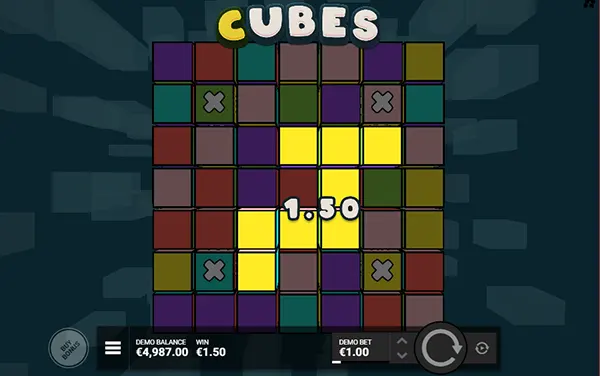
Instead of paylines, Cubes 2 uses Cluster Pays. You win by landing groups of the same colour touching horizontally or vertically, with winning clusters starting from five connected blocks. Once a cluster pays, the winning blocks disappear and new blocks fall in, which can create additional wins within the same paid spin.
Another unusual part is the way the game avoids a classic “low vs high symbol” hierarchy. The colour blocks are typically treated as equals, so the win size is driven primarily by cluster size, multipliers, and how far the grid expands rather than by chasing a rare premium symbol.
The expanding grid explained step by explain (5×5 to 11×11)
Think of each paid spin as a chain reaction. You begin on a 5×5 matrix. If you form a qualifying cluster (five or more connected blocks of one colour), it pays, those blocks vanish, and the grid refills as new blocks drop into place.
If the refill creates another qualifying cluster, you get another payout in the same spin. While that win chain continues, the grid can expand outward by adding extra rows and columns. With enough consecutive wins, it can grow all the way to 11×11, which increases the number of possible connections and makes larger clusters more likely.
When the chain ends, the game typically returns to its default size for the next paid spin unless a feature changes that behaviour. This is the key reason the slot can feel unpredictable: a small early win can be valuable if it keeps the sequence alive and unlocks a larger board.
Payout profile in 2026: RTP, volatility, and what that means for real play
In 2026, Cubes 2 is widely described as high volatility, and it is most often listed with a default RTP of 96.33%. High volatility means results are uneven: you can see longer stretches of modest returns, then occasional larger spikes when the grid expands and multipliers land in the right moments.
RTP is a long-run theoretical average, not a session promise. Two players can experience very different results over the same number of spins. It is also important to know that some operators may run different RTP configurations depending on licensing rules, so checking the game info screen on the site you use is a practical habit.
The maximum win of 10,500× is a ceiling, not a frequency indicator. It tells you what the rules allow, not how often a top-end outcome happens. A sensible approach is to treat the slot as “swingy” by design and choose a stake that keeps you comfortable through quiet patches.
Corner multipliers and Color Blast Jackpots: what they do and when they matter
Cubes 2 includes special multiplier tiles positioned at the corners of the grid. In practical terms, these multipliers matter when winning clusters interact with them, as the multiplier can increase the value of a win and make a cascade significantly more profitable than the cluster size alone would suggest.
The game is also known for including a feature often described as Color Blast Jackpots. Rather than a progressive jackpot, this concept is typically presented as a built-in feature that can add extra payout moments during feature play, giving players another route to a strong win beyond pure cluster size.
If you want a clear mental model for bigger outcomes, focus on three drivers: how large the grid becomes, how large the winning clusters are, and whether multipliers become involved. The most memorable spins tend to be those where all three align within one chain of cascades.
Bonus rounds in Cubes 2: what triggers them and how they change the rules
Cubes 2 is commonly listed as having two separate free spins bonus modes. The details may be described differently across casinos, but the general idea is that the two bonus types alter how colours behave and how the feature develops, which keeps the gameplay from feeling repetitive.
Many versions also include a pre-bonus interaction, where you may pick cubes before free spins begin. This selection can influence the number of spins and the way colours behave during the feature, which changes the “shape” of the bonus from one trigger to the next.
One of the biggest gameplay differences in free spins is that the grid behaviour can feel more persistent. When the board remains larger for longer, or when the feature creates more stable colour patterns, it can set up the conditions for oversized clusters that are harder to build in the base game.
Bonus Buy and safer play notes (what to check before you use it)
Cubes 2 is often associated with a Bonus Buy option, but availability depends on the operator and the market. In some jurisdictions, especially those with stricter rules, bonus buy features may be restricted, meaning you might not see them even if the game supports them elsewhere.
Where Bonus Buy is available, listings often mention two buy choices with different costs, commonly around 109× or 129× the stake depending on the bonus type. That is a large upfront commitment, so it changes your risk profile: you are concentrating variance into fewer events rather than spreading it across many base spins.
Because the game is high volatility, safer play habits matter. Set a session budget, keep stakes proportionate to your bankroll, and avoid chasing losses after a dry run. The slot’s core design encourages “one more try” thinking because a single expanding-board spin can change the session, so it helps to decide limits before you start.