Deadwood: How the Slot Builds Tension — and Why the Bonus Might Not Hit the Way You Expect
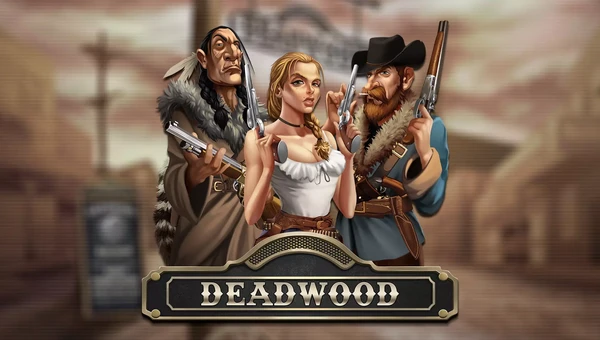
Deadwood by Nolimit City has a reputation for feeling “one spin away” from chaos. That sensation isn’t an accident or just a theme choice. The game is engineered to create escalating anticipation through a mix of high volatility, feature timing, and mechanics that can look promising while still delivering wildly different outcomes. As of 2025, it remains a well-known example of how modern slots use pacing and conditional features to keep players engaged, even when the rewards don’t arrive on schedule.
Why Deadwood Feels So Tense: Volatility, Pace, and Near-Misses
Deadwood is built around high volatility, which means the game can go long stretches without a meaningful payout and then suddenly produce a large win. That uneven rhythm is a major reason the slot feels tense. Even though the hit frequency is often quoted around 40% for some versions, many of those hits are low-value outcomes that don’t materially change the balance. The mind registers “activity,” but the bankroll still declines, which naturally raises emotional pressure and makes the next feature feel increasingly important.
The reel setup (3-4-4-4-3) and 576 ways to win also contribute to the tension. A grid like this can show lots of partial potential: symbols line up “almost” correctly across the central reels, and the player sees many shapes that look like they should connect into something bigger. That “almost there” visual language is powerful. It encourages the belief that the game is close to a significant win even when, mathematically, each spin is independent.
Another pressure point is the slot’s relationship between base gameplay and bonus frequency. Bonus rounds are not constantly arriving, and many sessions will feel like they’re being carried by anticipation rather than rewards. Some sources list a bonus trigger frequency around 1 in 197 spins on average, which is enough to create long stretches of waiting in real play. That waiting is where the tension lives: the slot makes you feel like you’ve “put in time,” and your brain wants the game to pay you back for it.
The Psychological Trick: Why “Almost Triggering” Feels Like Progress
Deadwood uses features and visual cues that can create an impression of momentum. For example, wild-related mechanics can appear in ways that look like the start of something significant. You might see the kind of symbol or partial reel fill that previously led to a strong outcome, and the brain treats it like a signal that the game is “warming up.” This isn’t unique to Deadwood, but the theme and presentation amplify it: gunfights, tense audio stings, and aggressive animations all reinforce the idea that you’re approaching a critical moment.
This is where many players feel confused. They might think, “I’ve seen the setup — the bonus has to be close.” In reality, those patterns are not a countdown. They are part of the regular distribution of symbols and animations. Deadwood is simply very good at presenting common outcomes in a way that looks like meaningful build-up. The tension doesn’t require the bonus to be near; it only requires the slot to repeatedly hint that it could be.
It also helps that the slot’s identity is tied to big potential. With a maximum win often listed at 13,950x stake and an RTP commonly shown around 96.03% (though casinos can run different RTP versions), the game naturally encourages “one more try” logic. The player isn’t chasing small wins — they’re chasing the moment where the whole screen becomes valuable.
Deadwood’s Core Mechanics: xNudge and Why It Creates False Certainty
xNudge is the mechanic most associated with Deadwood. In practical terms, it can turn a partially visible stacked wild into a fully expanded wild reel by nudging it into place, often with a multiplier that increases as the wild nudges. That sounds like a straightforward “good thing,” and it often is — but it also creates many situations where the slot looks like it should deliver more than it does.
The tension comes from visibility. When a wild is partially present, the player can already imagine the completed reel. The game is essentially showing you a “preview” of power. But the value depends on what lands around it, whether the win lines connect, and whether the multiplier applies in a meaningful way. You can get a full wild reel and still walk away with a result that feels underwhelming because the connecting symbols are poor or the multiplier doesn’t scale into a strong combination.
Deadwood also uses the idea of “event spins” — moments that look like the slot is entering a special mode. These moments increase engagement because they feel like a break from the ordinary base spins. The problem is that even when the mechanic appears, it may be a low-impact version of the action, and it’s easy to overestimate how often those moments lead to serious profit across a full session.
Why a Strong Mechanic Can Still Produce a Weak Session
A mechanic like xNudge creates concentrated excitement, but it doesn’t guarantee consistent value. A player can have several spins that look promising and still fail to hit the combinations needed for a balance-changing result. That gap between what the screen suggests and what the payout delivers is one of the reasons Deadwood is memorable — and also why some players feel the slot “teases” them.
Deadwood’s design encourages emotional interpretation. When you get the wild reel, it feels like the game has “given you the key,” so the natural expectation is that the door must open. But slot outcomes are not reward narratives; they are probability distributions. You can be given a powerful visual event and still land low-paying symbols or disconnected patterns. That can make the session feel unfair even when it is functioning exactly as designed.
It’s also important to remember that Deadwood appears with different RTP configurations depending on where it’s hosted. Some reviews and databases list 96.03% as a common figure, but lower RTP versions have been reported on certain sites. If the slot is running a lower RTP setting, the long-term return expectation shifts, and a player may feel the bonus “underperforms” more often — not because the bonus is broken, but because the overall game is tuned differently.

Why the Bonus Might Not Work Like You Expect: Structure, Timing, and Real Outcomes
Deadwood’s bonus modes are often discussed as the place where the slot “really happens,” but expectations are usually shaped by highlight clips rather than typical outcomes. The slot can produce dramatic wins, yet most bonus rounds do not look like the videos people share. As of 2025, it’s widely described as a high-risk title: big upside exists, but the median experience is much less cinematic than the best-case scenario.
One practical reason the bonus might not hit as expected is that bonus value depends heavily on early conditions. If the bonus opens without strong multipliers, without useful wild positioning, or without the right symbol distribution, it may never “ignite.” In many high-volatility slots, the bonus needs a specific chain of events to become exceptional. Deadwood is a clear example of that: you can trigger the feature, feel relief, and still end up with a return that barely covers the cost of chasing it.
Another issue is timing pressure. Players often reach the bonus after a long dry spell, meaning expectations are inflated by the emotional cost of waiting. That makes any average bonus feel like a disappointment, even if it is statistically normal. The longer the stretch before the feature, the more the brain frames the bonus as a “payback moment,” even though the game is not designed to compensate you for time spent.
How to Set Better Expectations (and Protect Your Bankroll)
The simplest way to approach Deadwood is to treat it like what it is: a high-volatility slot with occasional extreme outcomes. If you choose to play, it’s smarter to plan around variance rather than hope that the bonus will behave like a guaranteed turning point. The bonus is a chance, not a fix. Even the game’s headline numbers — such as a max win of 13,950x — describe an upper limit, not what happens for most players.
Bankroll planning matters more here than in softer slots. Because bonus frequency can be relatively sparse and many hits are small, a session can burn through funds quickly. A practical approach is to decide a clear spending cap before starting and to avoid increasing stake sizes purely because the game “feels close.” That feeling is part of the design, not an indicator of probability shifting in your favour.
Finally, if you’re comparing Deadwood to newer Nolimit City releases in 2025, it’s worth knowing that its sequels and related titles can push volatility even further, sometimes with much higher maximum wins. That doesn’t make Deadwood outdated — it simply means its tension profile is now a reference point in a catalogue that has become increasingly extreme. Understanding that context helps keep expectations realistic and reduces the frustration that comes from assuming every bonus should deliver a headline moment.